Free HVAC estimate template
Updated 2026-11-07 · By the HVAC Service Estimator team
An HVAC estimate has a structure the trade actually uses: equipment is a material line with the capacity written in, installation is labor in hours, refrigerant is priced by the pound with the type named, and commissioning and permits get their own lines. The generator below follows that structure, so the estimate you hand a homeowner is one they can compare against another quote line by line.
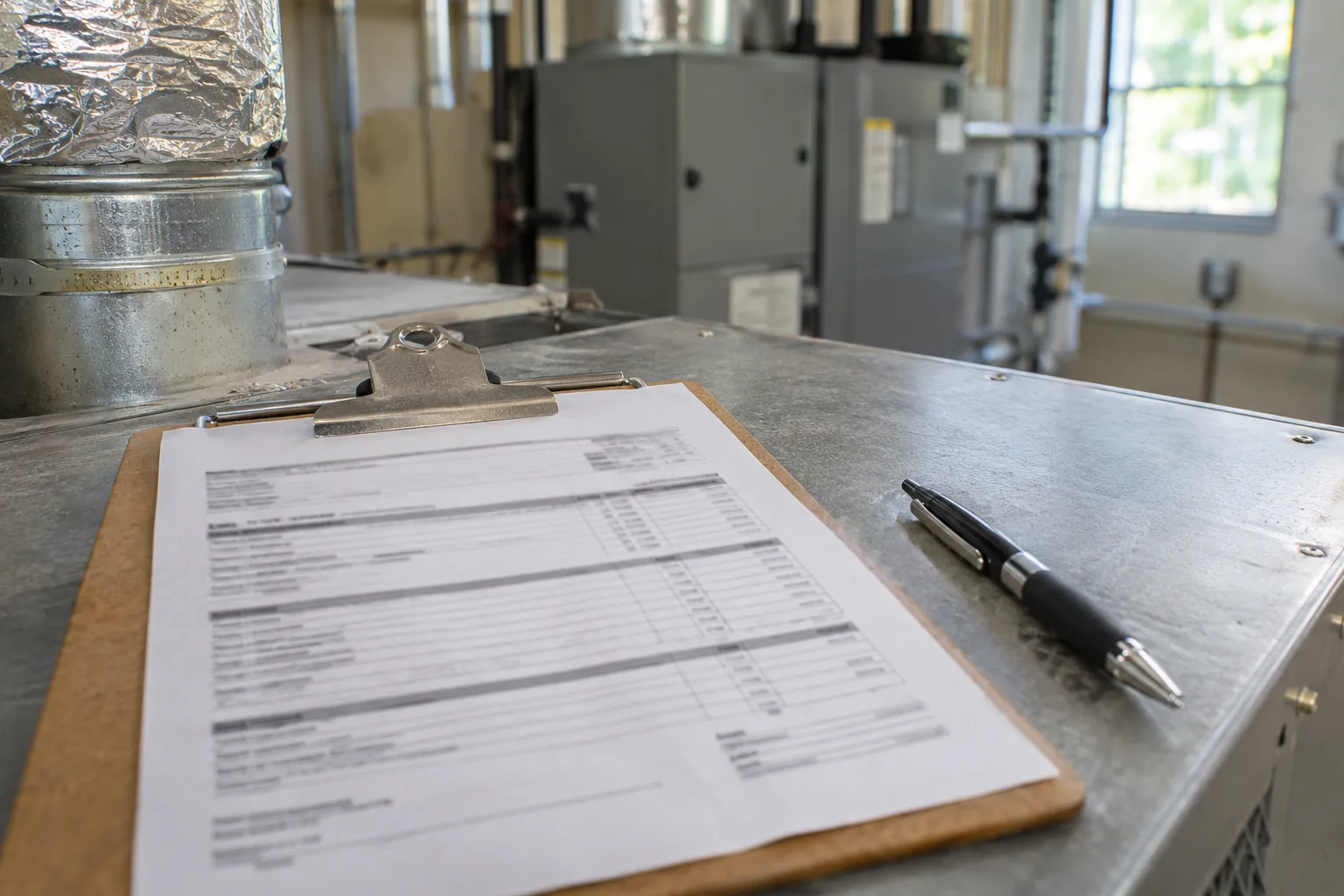
Fill in the customer and the existing equipment, add your material and labor lines, and download a PDF with a signature line. The generator works for service repairs and full changeouts alike - a capacitor replacement needs four lines, a changeout needs twenty, and the structure is the same either way.
What belongs on an HVAC estimate
- Your details: company name, address, phone, contractor license number, and the estimate number and date.
- Customer and service address: on rental and property management work these are not the same address.
- Existing equipment: make, model number, serial number, capacity, efficiency rating and refrigerant type, read off the nameplate and photographed rather than copied from memory.
- Scope in plain words: "Replace 3-ton condenser and matched coil, reuse existing furnace and ductwork," not "HVAC work."
- Equipment as material lines, each with capacity and efficiency in the description.
- Installation labor, in hours at your rate, on its own line.
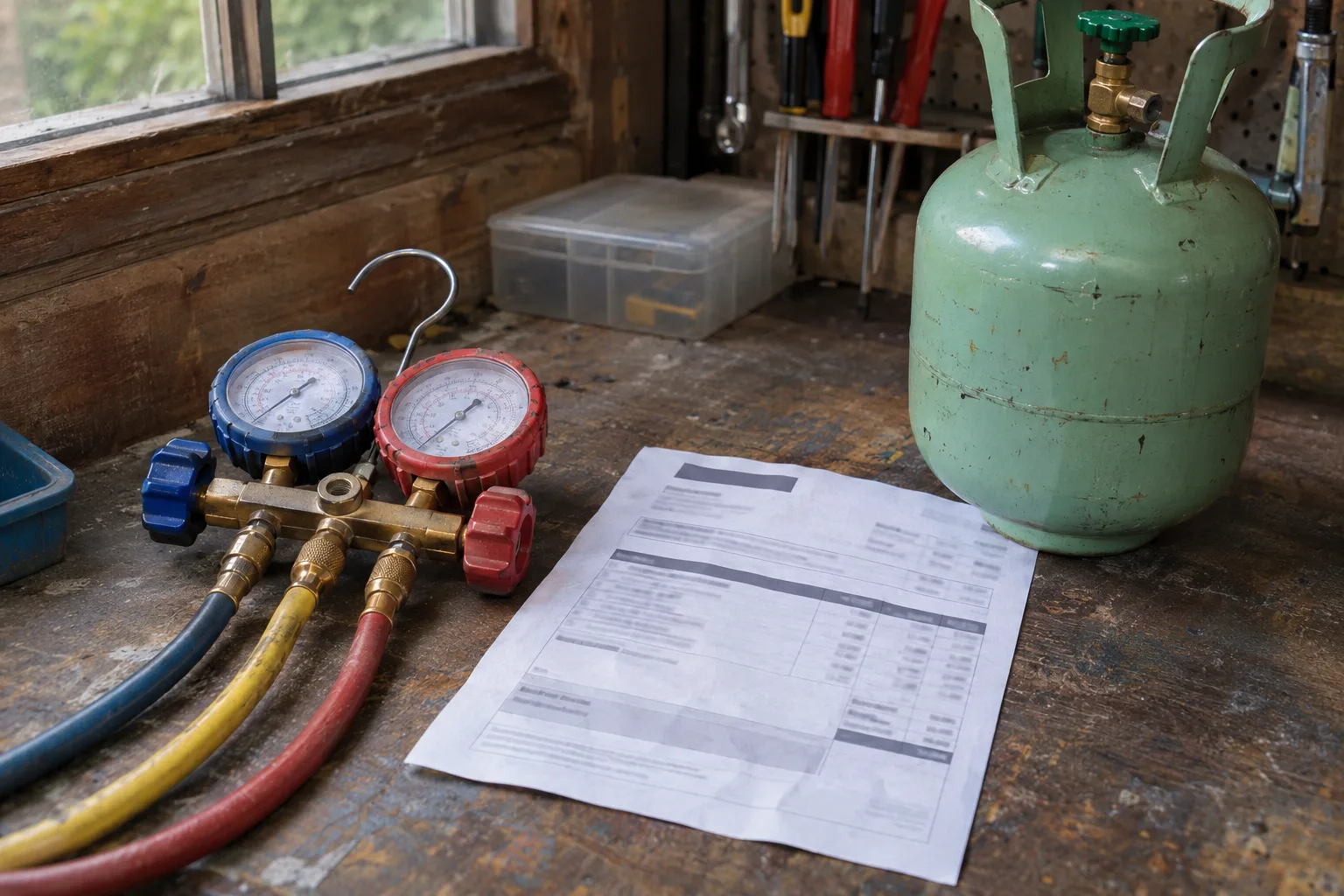
- Refrigerant by the pound, with the type named.
- Sealed-system labor, broken out into its steps.
- Commissioning, as its own line with the readings it will produce.
- Permit and inspection fees, as pass-through, plus your labor to pull and attend.
- Access: attic, crawlspace, roof or crane, priced as labor.
- Tax, total and terms, with a signature line.
Equipment lines: capacity in every description
This is the single habit that separates a professional estimate from a number scribbled on a card. Capacity and efficiency go in the description, every time.
| Write this | Not this |
|---|---|
| 3-ton condenser, 14.3 SEER2, R-454B | New AC unit |
| Matched 3-ton evaporator coil, cased | Indoor coil |
| 80,000 BTU gas furnace, 80% AFUE, single-stage | Furnace |
| 2.5-ton heat pump with 10 kW backup heat kit | Heat pump |
| 3/4 in x 3/8 in lineset, 30 ft, insulated | Materials |
| Non-fused disconnect, 60 A, with whip | Electrical |
| R-454B, 4 lb, weighed in | Refrigerant charge |
Published figures show why the detail pays. Angi puts a full system replacement at about $7,500 on average over a $5,000 to $22,000 range, 2026 guide data shows central AC alone at $3,900 to $7,900 installed, and Trane's own pricing guide lists an 80% single-stage gas furnace at $5,093 to $5,481. A homeowner holding two bundled totals inside a range that wide is comparing nothing. A homeowner holding two itemized estimates can see tier, scope and inclusions.
Keep equipment and labor apart
Equipment is material. Installation is labor, in hours, at your rate. Bundling them is the most common failure on HVAC estimates and it costs jobs - not because the total is too high but because the customer has no way to believe it. It also costs you internally: when a line is added or removed from the scope you need to show which part of the number moved, and you cannot do that inside a lump sum.
The sealed system lines
Any job that opens the refrigerant circuit follows one sequence, and each step is billable labor:
- Recover the existing charge with recovery equipment, by an EPA 608 certified technician.
- Braze the joints and pressure-test with dry nitrogen to confirm they hold.
- Evacuate to 500 microns and confirm the vacuum holds with the pump isolated.
- Weigh in the charge to the nameplate value, adjusted for lineset length.
State clearly which product the customer is buying on leak work. A recharge without a leak search is a temporary fix, and the difference is visible in the published figures: Angi shows leak repair at $250 to $1,500 against a recharge alone at $100 to $500, while Fixr puts leak repair at $200 to $1,600 with an average near $800 and Homeyou reports an average of $837 within a $479 to $1,389 band.
Commissioning, as a line with a deliverable
Commissioning is not part of "install" and not a courtesy. Give it a line and say what it produces: superheat and subcool measured and recorded, supply and return static pressure, measured airflow against the design value, combustion analysis on gas equipment, and thermostat staging verified. Those readings go on the invoice when the job closes, and they are what settles a performance complaint the following summer.
Sizing and the load calculation note
Put a line in the terms stating that final capacity is subject to a Manual J load calculation. Never sell a tonnage off a photo or off the old nameplate - the existing size may be wrong already, or correct for a house that has since gained insulation, new windows or an addition. The estimate can carry the equipment and labor framework the same day; the calculation happens before anything is ordered.
Terms worth printing
- How long the estimate is valid, which matters when equipment pricing is moving.
- That it covers the stated scope, and anything found after demolition will be quoted before it is done.
- How additional work gets approved, and that approval is recorded.
- Final capacity subject to the load calculation.
- Labor warranty terms, stated separately from the manufacturer's equipment warranty.
- The diagnostic or service call fee, and whether it is credited if the work proceeds.
- A signature line, with the date.
Repair estimates use the same template
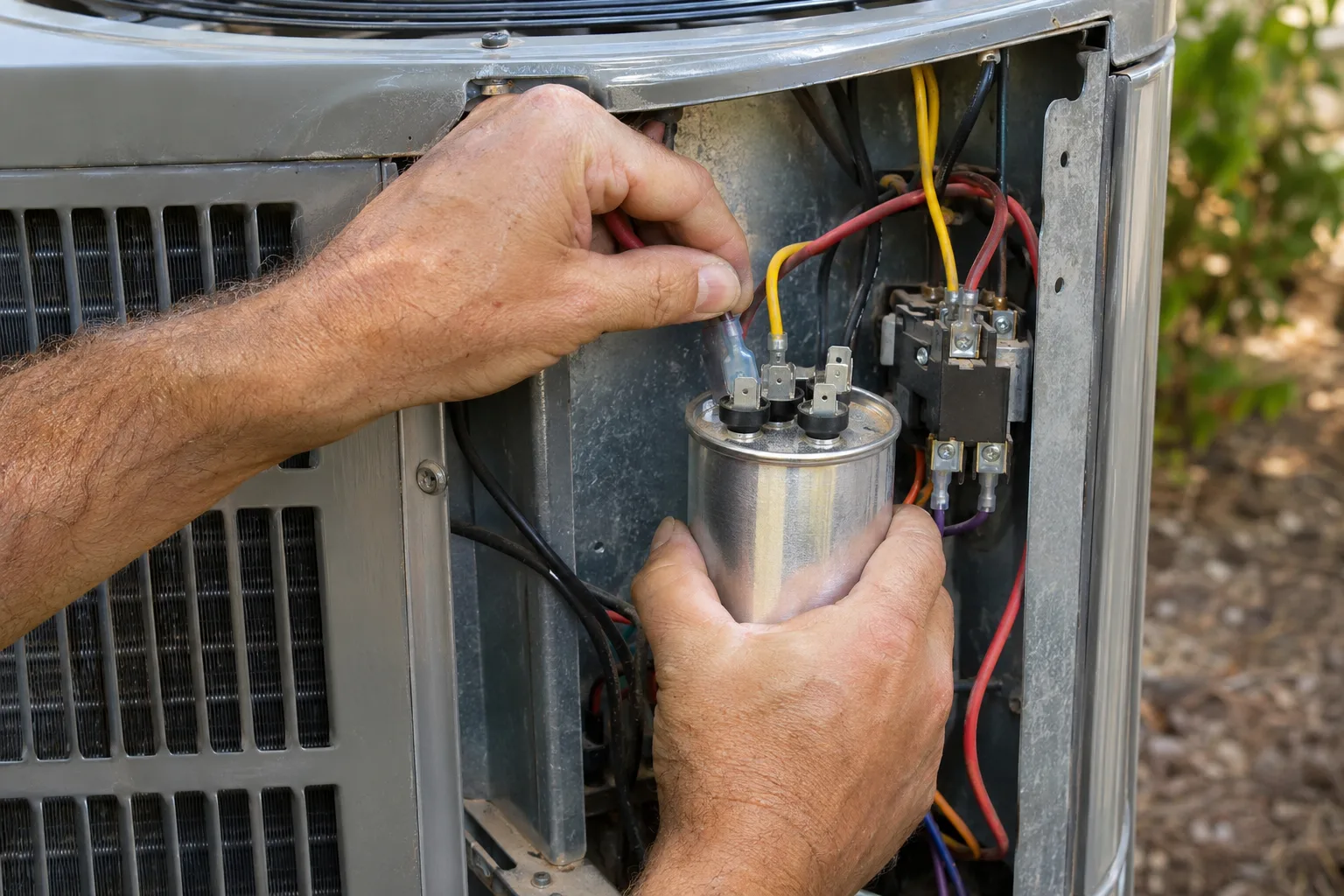
A repair is a short version of the same document: the service call fee as a labor line, the part as a material line, the labor to install it, tax and total. Fixr puts overall AC repair at $375 on average with most jobs between $250 and $700, capacitors at $100 to $400 with an average near $175, while This Old House shows $150 to $400 parts and labor for capacitor work. On older equipment, write the repair estimate and the replacement estimate side by side - and on an R-22 system be straight that like-for-like sealed-system repair is no longer practical, since the refrigerant is out of production and remaining supply is expensive and inconsistent.
For the full sequence see how to write an HVAC estimate, set your hourly numbers with the HVAC labor rates guide, and use the HVAC invoice template when the work is done.
Frequently asked questions
What should an HVAC estimate template include?
Your company name, license number and contact details; the customer and the service address; the existing equipment's make, model, serial and capacity; the scope in plain words; equipment as material lines with capacity and efficiency; installation labor in hours at your rate; refrigerant by the pound with the type named; sealed-system labor; commissioning; permit and inspection fees; access charges; tax; the total; a validity period; and a signature line.
Should the template bundle equipment and installation?
No. Keep them on separate lines. A bundled "system installed" figure gives the homeowner nothing to evaluate and reads as padding, which is the objection you least want to answer by phone. Published replacement ranges span $5,000 to $22,000 per Angi, so the only comparison that means anything is line by line.
Can I fill the capacity in from the old nameplate?
Use the nameplate to record what is installed now, not to decide what to install. The existing size may be a previous contractor's error or wrong for a house that has since changed. Confirm capacity with a Manual J load calculation, and state on the estimate that final capacity is subject to it.
Do I need a signature on an HVAC estimate?
Get one, or documented electronic approval, before any equipment is ordered. Requirements for written estimates and customer authorization vary by state, so check your own rules, but the practical reason holds everywhere: on a changeout you are committing to a special-order purchase, and you want the scope and the number agreed in writing before you do.
Sources
- Angi - HVAC replacement cost 2026
- Trane - Pricing guide
- Fixr - Central air conditioner repair cost 2026
Write the estimate from a photo
Photograph the nameplate and the equipment, dictate what you found, and get an itemized estimate with equipment, labor and refrigerant on separate lines.
More in for shops