AC compressor replacement cost
Updated 2026-11-07 · By the HVAC Service Estimator team
Replacing an air conditioning compressor is the most expensive repair a split system can need short of replacing the system itself, and the published figures disagree. Angi puts it at $800 to $3,000. Homeyou's 2026 data puts a compressor changeout at $1,679 to $3,687 with an average of $2,487 - a floor more than twice Angi's. Both figures are real, and the gap between them is the most useful thing on this page, because it tells you exactly which question to ask your contractor.
The published figures, and the gap between them
This is one of two jobs in residential HVAC where the sources genuinely conflict, so here are both rather than an average of them.
| Source | Figure | Scope as described |
|---|---|---|
| Angi 2025 | $800-$3,000 | Compressor replacement |
| Homeyou 2026 | $1,679-$3,687, average $2,487 | Compressor changeout |
| Fixr 2026, for context | Average AC repair about $375; most $250-$700 | All repair types |
| 2026 guide, for comparison | $3,900-$7,900 | Central AC replacement, installed |
| Angi 2026, for comparison | About $7,500 average, $5,000-$22,000 | Full system, AC plus furnace |
The two ranges agree at the top - roughly $3,000 to $3,700 for a big, difficult job - and disagree sharply at the bottom. Homeyou's word "changeout" is probably the key: a changeout is the whole operation, including a new filter drier, a full charge of refrigerant and several hours of skilled labor. Angi's $800 floor reads more like a small-tonnage unit, or a compressor supplied under a manufacturer parts warranty where you pay for labor and refrigerant only. Those are different purchases that happen to share a name. When you get a quote, establishing which one it is will explain most of the difference.
Why this repair costs what it does
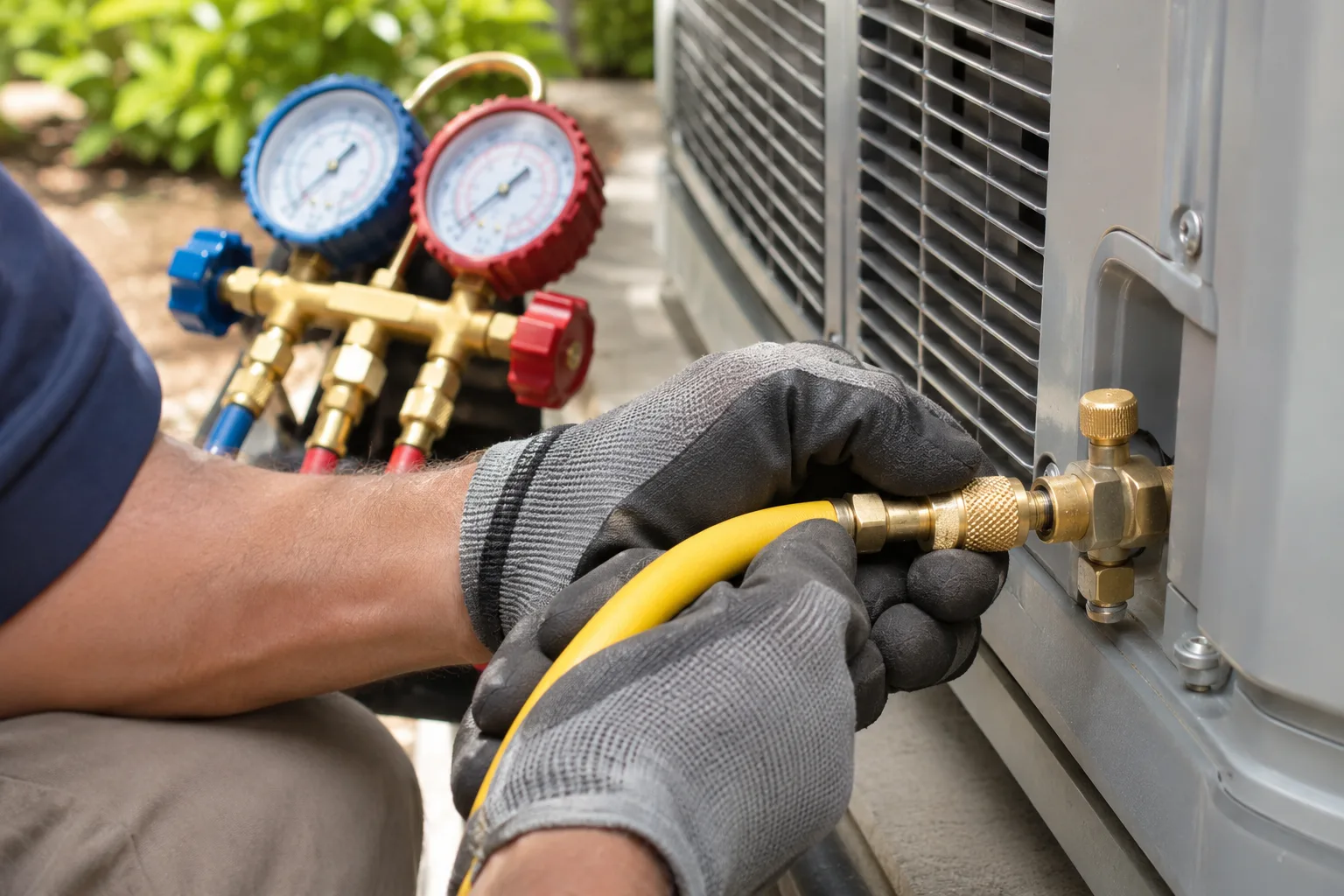
The compressor is both the most expensive component and the one that requires opening the sealed refrigerant circuit. A correct changeout is a sequence, and skipping steps is how a $2,500 repair fails inside a year:
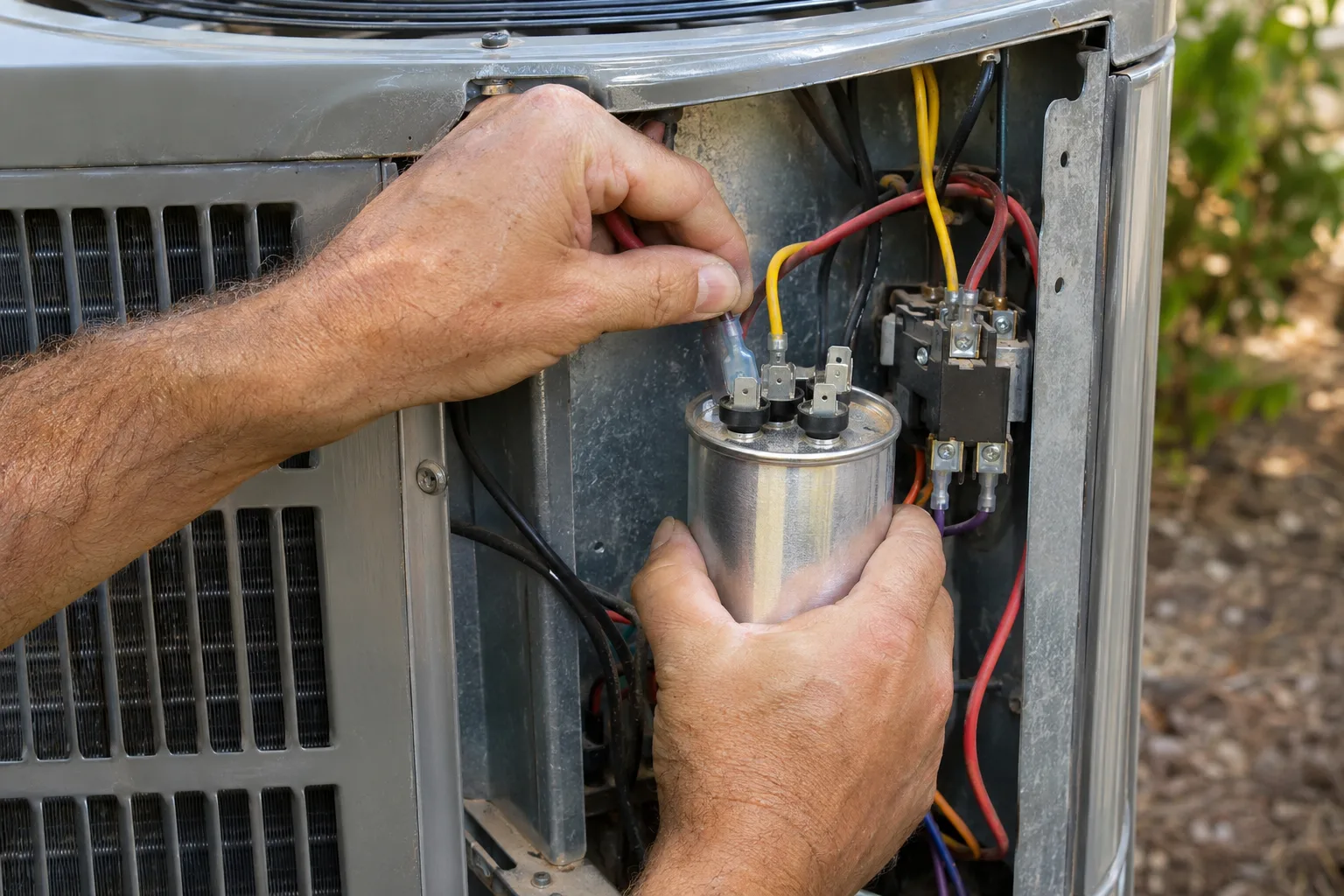
- Diagnose it properly first. Compressor failure is confirmed by electrical tests - winding resistance, a check for a winding shorted to ground, amp draw against the rating plate, and ruling out the capacitor and contactor. A compressor that hums and trips may only have a bad capacitor, which Fixr prices at $100 to $400, averaging about $175. Nobody should condemn a compressor without having measured it. See AC capacitor replacement cost.
- Recover the refrigerant charge into a recovery machine. Venting it is illegal.
- Cut out the old compressor and braze in the new one under a nitrogen purge, so the inside of the tubing does not oxidize and shed scale into the new compressor.
- Replace the filter drier. Non-negotiable. The old drier is saturated and, if the compressor burned out, contaminated with acid. On a burnout the system needs a proper clean-up, sometimes with a suction-line drier as well.
- Pressure-test with nitrogen, then evacuate to roughly 500 microns with a micron gauge and confirm the vacuum holds with the pump isolated. That is the proof the system is dry and leak-free.
- Weigh in a full charge to the nameplate value, then verify by superheat and subcooling, and record the compressor amp draw.
Refrigerant is a material line priced by the pound, and the type matters: R-410A on most existing residential systems, R-454B on new equipment, and R-22 on anything roughly pre-2010. A compressor changeout needs a full charge, not a top-off, which is why the refrigerant line on this quote is meaningful rather than incidental.
Find out why it died
Compressors rarely fail of old age alone. Something usually killed them, and if that something is still there it will kill the new one too. A technician who replaces a compressor without identifying a cause has handed you a very expensive repeat appointment. The usual culprits:
- Low charge from an unrepaired leak. Refrigerant also carries oil back to the compressor and cools the motor windings; an undercharged system runs hot and poorly lubricated. See refrigerant leak repair cost.
- Overcharge or non-condensables in the system, usually from a careless previous recharge.
- Restricted airflow across the evaporator - dirty filter, dirty coil, collapsed or undersized ducts - which floods the compressor with liquid refrigerant.
- A dirty condenser coil or a failing condenser fan motor, so the system cannot reject heat and discharge temperatures climb.
- Electrical - a weak capacitor, a pitted contactor, or low or unbalanced supply voltage making the motor work harder than it should.
Ask directly: what caused this, and is the cause fixed? If the answer is a shrug, get a second opinion before spending $2,500.
Repair or replace the system?
Hold the quote up against replacement. 2026 cost guides put a central AC changeout at $3,900 to $7,900 installed, and Angi's 2026 full-system average is about $7,500. Against those numbers:
- Repair is defensible when the compressor is still under a parts warranty, when the rest of the system is young and the cause of failure is clear and fixed, or when you are moving within a year or two.
- Replacement usually wins when the system is roughly twelve years or older, when the evaporator coil is also suspect, when the compressor burned out and contaminated the circuit, or when the quote reaches Homeyou's upper end near $3,687 - at which point you are spending close to half a new system's price on old equipment with no warranty on anything but the one new part.
- Replacement is effectively the only answer on an R-22 system, because a full charge of a refrigerant that is no longer produced makes the economics indefensible regardless of the labor price.
If you do replace, the decision widens: see AC replacement cost, and heat pump cost if a heat pump could take over the heating too. Whatever you buy, insist on a confirmed Manual J load calculation - the old nameplate size is an inheritance, not a calculation, and nobody can size equipment from a photograph.
Questions to ask before approving
- How was the compressor diagnosed - what were the winding and amp readings?
- Is the compressor under manufacturer warranty? Was the serial number checked?
- Does this quote cover part, labor, filter drier and a full refrigerant charge, or only some of those?
- What refrigerant, how many pounds, and at what price per pound?
- What caused the failure, and what is being done about the cause?
- Will you evacuate with a micron gauge and weigh in the charge, and will I get the startup readings?
- What warranty covers your labor if it fails again?
With HVAC Service Estimator HVAC+ you can lay out compressor, filter drier, refrigerant by the pound and labor hours as separate lines at local rates - which is the fastest way to see whether a quote sits at Angi's floor because it is a warranty job, or at Homeyou's average because it is the whole changeout. An app estimate is informational; the contractor's written quote, with the diagnosis behind it, is what counts.
Frequently asked questions
Why does one source say $800 and another say $1,679 minimum?
Almost certainly scope. A compressor can mean the part alone, the part installed under warranty with you paying only labor and refrigerant, or a full changeout where you buy the compressor, the filter drier, a full charge of refrigerant and several hours of labor. Angi's $800 floor looks like the warranty-labor or small-tonnage end. Homeyou's $1,679 floor looks like a complete out-of-warranty changeout. When you get a quote, ask which of those three jobs it is - that one question explains most of the $800 difference.
Is my compressor covered under warranty?
Check before you approve anything. Many residential compressors carry a manufacturer parts warranty of several years, often ten on registered equipment, and the registration requirement is where homeowners get caught. A parts warranty covers the compressor, not the labor, the refrigerant or the filter drier - which is exactly why a 'covered' repair still carries a real bill - those three items are most of the ranges above. Have the installer look up the serial number before the work starts.
Is it worth replacing a compressor or should I replace the system?
Weigh the quote against a changeout. 2026 guides put central AC replacement at $3,900 to $7,900 installed, and Angi's 2026 full-system average including the furnace is about $7,500. A $2,487 average compressor job is a large fraction of the first figure. On a system over roughly a dozen years old, or one where the coil is also suspect, the compressor repair often buys you a few years on worn-out equipment for most of the price of new equipment with a full warranty.
What if my system uses R-22?
Then replacing the compressor is almost never the right answer. R-22 is no longer produced, the remaining supply is expensive, and a compressor changeout requires a full charge of it. You would be paying premium refrigerant prices plus a major repair to extend the life of a system that cannot be economically serviced again. Price a replacement instead.
Sources
- Angi - How much does HVAC repair cost
- Angi - Insider's price guide to a new heating and cooling system (2026)
- Fixr - Central air conditioner repair cost (2026)
- Trane - Pricing guide
Get an estimate for your system
Snap the equipment and get an itemized estimate with equipment and labor in minutes.
More in repair costs